

Motorcycle riding in Uganda offers unparalleled freedom and mobility, from daily commutes on boda bodas to long-distance touring. However, riding requires vigilance, proper training, and consistent preparation. This guide outlines critical motorcycle safety tips to help you stay protected and responsible on the road.
1. Pre-Ride Motorcycle Safety Inspection
Performing a motorcycle inspection before every journey is the most effective way to prevent accidents. Riders should check their tire pressure, tread depth, brake responsiveness, chain lubrication, and engine oil levels. Additionally, ensure all lights, indicators, and mirrors are functional and correctly positioned. Regularly monitoring your bike’s condition helps detect mechanical issues before they become hazards.
2. Why Protective Riding Gear Matters
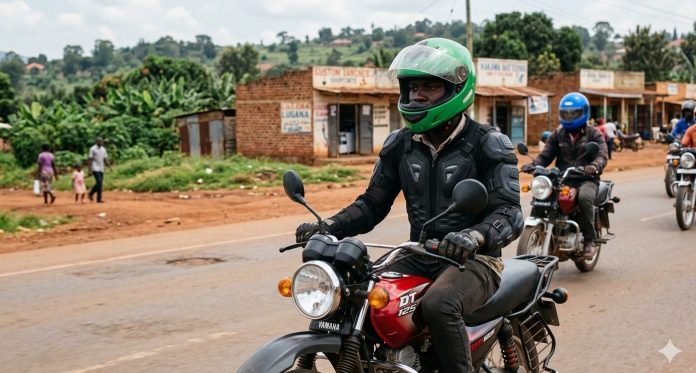
Protective riding gear is essential for minimizing injury risk during accidents, regardless of trip length. Every rider should wear a high-quality, impact-resistant helmet, a durable riding jacket, gloves, and protective trousers. Sturdy riding boots provide crucial ankle support. Prioritizing this gear creates a vital safety barrier that can significantly reduce the severity of head injuries and road abrasions.
3. Navigating Uganda’s Road Conditions
Navigating Ugandan roads requires defensive riding due to diverse challenges like potholes, pedestrians, wandering animals, and sudden traffic changes. Skilled riders consistently scan the environment and adjust their speed for visibility, wet surfaces, or heavy congestion. Adapting your technique to specific road conditions is key to maintaining bike control and ensuring you reach your destination safely.
4. Avoiding Overconfidence as a Rider
Confidence is beneficial, but overconfidence can lead to dangerous habits and reduced risk awareness. Experienced riders stay safe by remaining humble, continuously assessing their control, and prioritizing caution over speed. Instead of asking how fast they can go, responsible riders constantly evaluate their control limits and current surroundings to make better safety decisions.
5. Understanding Your Specific Motorcycle
Every motorcycle handles differently, whether it is a small commuter bike, a sport bike, or a heavy touring motorcycle. Riders must understand their machine’s unique braking, acceleration, and cornering characteristics. Taking time to learn how your specific bike responds in various conditions ensures you can react effectively and maintain control when it matters most.
6. Riding With a Focused Mindset
Motorcycle safety is as much mental as it is physical. Avoid riding when you are extremely tired, emotionally distracted, or under the influence of alcohol. Your decision-making capacity directly impacts your safety on the road. A clear, focused, and alert mind is your best defense against potential accidents and unpredictable traffic situations.
7. Mastering Emergency Braking Skills
Many riders know how to accelerate but lack sufficient practice in emergency braking. Knowing how to stop safely can be the difference between avoiding a collision and experiencing one. Riders should regularly practice progressive braking, using both front and rear brakes correctly, and maintaining stability while coming to a controlled, rapid stop.
8. Respecting Other Road Users
Motorcycle safety is a shared responsibility among all motorists, pedestrians, and passengers. A responsible rider communicates clearly by using indicators, maintaining a safe following distance, and avoiding aggressive maneuvers. Respecting other road users reduces friction on the road and fosters a safer, more predictable environment for everyone sharing the commute.
9. Committing to Continuous Rider Training
No rider knows everything; the best riders treat every journey as a learning opportunity. You can improve your skills by seeking formal training, learning from experienced mentors, studying motorcycle mechanics, and engaging with the local riding community. Continuous improvement and knowledge sharing are essential habits for becoming a safer and more competent motorcycle operator.
10. Building a Culture of Safe Riding
Motorcycle culture is about community and shared responsibility. Behind every helmet is a person with family, dreams, and obligations. Safe riding isn’t just about fear; it’s about fostering a culture where every rider returns home safely. By promoting responsible habits, we ensure the road remains a space for enjoyment, adventure, and connection for everyone.
Frequently Asked Questions About Motorcycle Safety
What is the most important motorcycle safety tip?
The most important motorcycle safety tip is thorough preparation. A rider should inspect their motorcycle before every journey, wear appropriate protective gear, understand the specific road conditions, and make responsible, alert decisions. Prioritizing these foundational steps before every ride significantly improves your ability to stay safe on the road.
How can beginner motorcycle riders become safer?
Beginner riders improve safety by mastering basic control skills, such as smooth acceleration and proper braking techniques. It is also crucial to prioritize road awareness, learn from experienced mentors, and gain confidence through practice before attempting high-speed riding or navigating complex traffic environments. Consistent training is the fastest way to build competence.
How often should you check a motorcycle before riding?
A basic motorcycle inspection should be performed before every single ride. Key items to check include tire pressure, brake responsiveness, engine oil levels, and all lighting systems. Conducting these quick, routine checks ensures your motorcycle is performing correctly, helping you avoid mechanical failures and dangerous situations while you are out on the road.
Why do motorcycle riders need helmets?
Helmets are the most critical piece of safety equipment, significantly reducing the risk of fatal head injuries during crashes. They protect the rider’s head from direct impact and abrasions in the event of an accident. Wearing a quality, properly fitted helmet is a non-negotiable standard for all responsible motorcycle riders.
About Ride Safe Uganda
Ride Safe Uganda is a motorcycle safety and rider community initiative focused on promoting responsible riding, awareness, and a stronger motorcycle culture in Uganda. We believe every rider deserves the knowledge and support necessary to enjoy the road safely.
Ride Smart. Ride Responsible. Ride Safe.